




Atypical haemolytic uraemic syndrome (aHUS) is a rare, life-threatening, complement-mediated thrombotic microangiopathy. Despite advances in diagnostic and treatment, the transition from paediatric to adult care remains a vulnerable stage for adolescents and young adults with aHUS. This study aimed to identify key challenges faced by patients, families, and healthcare professionals during this process and develop consensus-based recommendations to guide structured, patient-centred transition care.
MethodologyA mixed-methods approach was used, comprising a systematised literature review with qualitative research involving two focus groups—one with paediatric and adult nephrologists and another with patients and families—combined with additional patient interviews. Findings were used to inform a consensus process conducted by a multidisciplinary scientific committee. Recommendations were drafted, reviewed and refined by the scientific committee, with consensus reached through collective discussion and oral agreement among all experts.
ResultsThe scientific committee developed 41 recommendations addressing three stages of transition: before, during and after transition to adult care. Recommendations emphasised structured planning, joint paediatric–adult consultations, transition readiness assessments, education on aHUS mechanisms and warning signs of recurrence and treatment adherence, uninterrupted access to complement inhibition therapy, psychological support, and clear emergency communication pathways. Multidisciplinary involvement, particularly of nurse-led case management, was considered to ensure continuity of care, while patient organisations were recognised as essential contributors to empowerment and peer support. A practical checklist was also developed to assist clinicians in ensuring comprehensive, consistent, and individualised follow-up.
ConclusionsThis is the first comprehensive document with expert recommendations for the transition of aHUS patients, supporting safer, more coordinated, and patient-centred integration into adult healthcare.
El síndrome hemolítico urémico atípico (SHUa) es una microangiopatía trombótica rara y potencialmente mortal, mediada por el complemento. Aunque los avances en el diagnóstico y el tratamiento han mejorado notablemente los resultados, la transición de la atención pediátrica a la adulta sigue siendo una etapa particularmente vulnerable para los adolescentes y adultos jóvenes con esta enfermedad. Este estudio tuvo como objetivo identificar los retos clave a los que se enfrentan los pacientes, las familias y los profesionales de la salud durante este proceso y desarrollar recomendaciones basadas en consenso para guiar una transición estructurada y centrada en el paciente.
MetodologíaSe utilizó un enfoque de métodos mixtos, que comprendió una revisión sistematizada de la literatura junto con investigación cualitativa que involucró dos grupos focales: uno con nefrólogos pediátricos y adultos y otro con pacientes y familias, combinado con entrevistas a pacientes. Los resultados sirvieron de base para un proceso de consenso desarrollado por un comité científico multidisciplinar.
ResultadosEl comité científico formuló 41 recomendaciones dirigidas a tres etapas: antes, durante y después de la transición a la atención sanitaria de adultos. Los resultados revelaron lagunas en las prácticas actuales de transición, incluyendo la limitada coordinación entre los equipos de nefrología pediátrica y adulta, la ausencia de protocolos estandarizados, barreras administrativas y socioeconómicas, malestar emocional y conocimiento insuficiente de la enfermedad por parte del paciente. Las recomendaciones destacan la importancia de una planificación estructurada, la realización de consultas conjuntas entre ambos equipos, la evaluación de preparación del paciente para la transición, la educación sobre la enfermedad, los signos de alerta de recurrencia y la adherencia al tratamiento, así como la garantía de un acceso ininterrumpido a la terapia con inhibidores del complemento, el apoyo psicológico y el conocimiento de vías de comunicación claras para emergencias. Asimismo, se consideró fundamental la participación de equipos multidisciplinares en funciones de gestión de casos, para garantizar la continuidad asistencial. Las organizaciones de pacientes también se reconocieron como agentes claves para fomentar el empoderamiento y prestar apoyo. Adicionalmente, se desarrolló una lista de verificación práctica para ayudar a los clínicos a garantizar un seguimiento completo, coherente e individualizado.
ConclusionesEs el primer documento con recomendaciones de expertos para la transición de pacientes con SHUa, apoyando una integración en la atención médica adulta más segura, coordinada y centrada en el paciente.
Atypical haemolytic uraemic syndrome (aHUS) is a rare form of thrombotic microangiopathy (TMA) caused by the dysregulation of the alternative complement pathway.1 The estimated prevalence of aHUS ranges between 0.5 and 2 cases per million individuals, making it an exceptionally rare disorder.2 Most patients with aHUS carry genetic variants, but disease onset appears to require an additional trigger.2 Clinical manifestations of aHUS include non-immune haemolytic anaemia, thrombocytopenia, and other systemic manifestations, such as acute kidney injury (AKI).3
Early recognition, appropriate treatment and a multidisciplinary approach are critical to achieving optimal patient outcomes and reducing the risk of irreversible organ damage or death.4 In this regard, the diagnosis and management of patients with aHUS have significantly improved over the past 20 years, leading to notable reductions in morbidity and mortality.5 However, the transition from paediatric to adult care is an area that requires further investigation,6 as adolescents and young adults, their parents, and the healthcare professionals involved continue to face considerable challenges during the handover.7 One of the main aspects that constitutes a key challenge for all of them is the management of complement inhibitor therapy during transition. For adolescents, they must progressively acquire the knowledge and skills needed to understand their condition, recognise the importance of treatment adherence despite the absence of symptoms, and assume increasing responsibility for self-management. At the same time, families need to shift from a primary caregiving role to a supportive one, while healthcare professionals must ensure effective coordination between paediatric and adult services, maintain treatment continuity, and facilitate a safe transfer of care.
Besides this, the transition from adolescence to adulthood is characterised by important physical, psychological and social changes that may have a significant impact on chronic diseases such as aHUS.8 The transition process is crucial in these diseases, and without adequate support, many adolescents are unable to switch successfully to adult healthcare.9 Education on the pathophysiology of aHUS and its management, and a joint communication between paediatricians, adult physicians, and patients and their families contribute to a safe transition of aHUS patients into adulthood.6 However, evidence focused on the transition from paediatric to adult care in aHUS is still limited, and further research is needed in order to understand the challenges, and unmet needs of aHUS patients and their physicians during the transition process.
This consensus aims to unravel the main barriers and challenges faced by the patients and their families, paediatricians and adult physicians during this process, and to provide practical recommendations on the paediatric to adult care transition in patients with aHUS, based on available evidence and clinical expertise from a multidisciplinary scientific committee.
Materials and methodsThis project was based on a systematised literature review and a qualitative investigation which served as basis for drawing up the recommendations.
A scientific committee of three paediatric and three adult care specialists in the management of aHUS patients was formed. Two of these experts acted as coordinators of the project. Participants were selected based on their clinical expertise in aHUS and experience in the management of patients transitioning from paediatric to adult care. The selection also aimed to ensure geographical representation across Spain and the inclusion of specialists involved in the management of aHUS in both paediatric and adult populations.
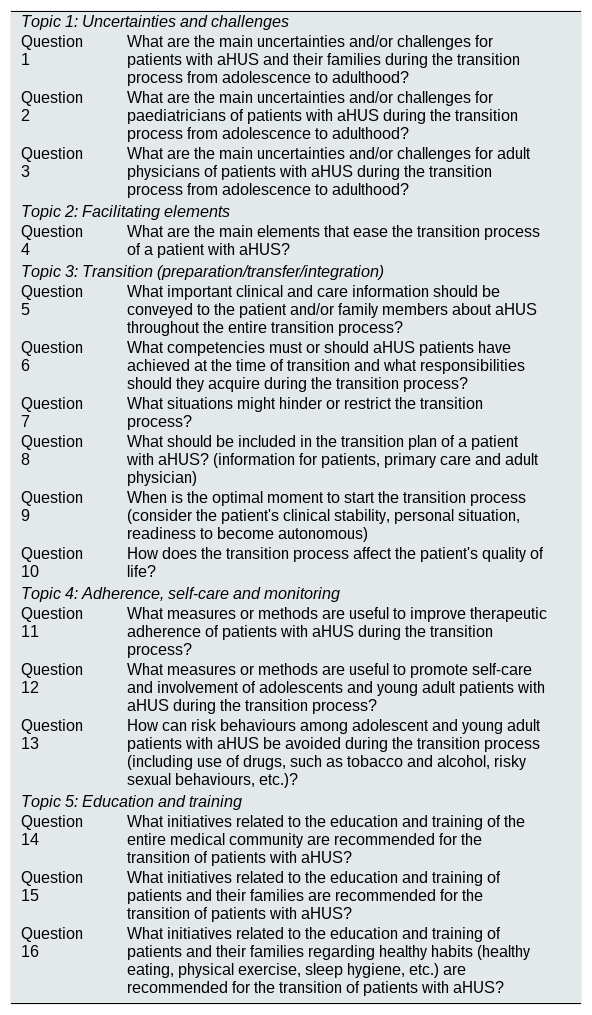
Five relevant topics regarding aHUS care transition from childhood to adulthood were established, and a total of 16 clinical questions using the Patient, Intervention, Comparison, Outcomes (PICO)10 or PCC11 format were proposed, when possible (Table 1).
List of relevant topics and questions to be addressed.
| Topic 1: Uncertainties and challenges | |
| Question 1 | What are the main uncertainties and/or challenges for patients with aHUS and their families during the transition process from adolescence to adulthood? |
| Question 2 | What are the main uncertainties and/or challenges for paediatricians of patients with aHUS during the transition process from adolescence to adulthood? |
| Question 3 | What are the main uncertainties and/or challenges for adult physicians of patients with aHUS during the transition process from adolescence to adulthood? |
| Topic 2: Facilitating elements | |
| Question 4 | What are the main elements that ease the transition process of a patient with aHUS? |
| Topic 3: Transition (preparation/transfer/integration) | |
| Question 5 | What important clinical and care information should be conveyed to the patient and/or family members about aHUS throughout the entire transition process? |
| Question 6 | What competencies must or should aHUS patients have achieved at the time of transition and what responsibilities should they acquire during the transition process? |
| Question 7 | What situations might hinder or restrict the transition process? |
| Question 8 | What should be included in the transition plan of a patient with aHUS? (information for patients, primary care and adult physician) |
| Question 9 | When is the optimal moment to start the transition process (consider the patient's clinical stability, personal situation, readiness to become autonomous) |
| Question 10 | How does the transition process affect the patient's quality of life? |
| Topic 4: Adherence, self-care and monitoring | |
| Question 11 | What measures or methods are useful to improve therapeutic adherence of patients with aHUS during the transition process? |
| Question 12 | What measures or methods are useful to promote self-care and involvement of adolescents and young adult patients with aHUS during the transition process? |
| Question 13 | How can risk behaviours among adolescent and young adult patients with aHUS be avoided during the transition process (including use of drugs, such as tobacco and alcohol, risky sexual behaviours, etc.)? |
| Topic 5: Education and training | |
| Question 14 | What initiatives related to the education and training of the entire medical community are recommended for the transition of patients with aHUS? |
| Question 15 | What initiatives related to the education and training of patients and their families are recommended for the transition of patients with aHUS? |
| Question 16 | What initiatives related to the education and training of patients and their families regarding healthy habits (healthy eating, physical exercise, sleep hygiene, etc.) are recommended for the transition of patients with aHUS? |
aHUS: atypical haemolytic uraemic syndrome.
A systematised literature review was conducted using mixed quantitative and qualitative data, following an adapted mixed-methods systematic review (MMSR) methodology.11
Publications related to the transition from paediatric to adult care in aHUS patients from the following databases were included: National Guideline Clearinghouse, National Library of Guidelines, TRIP database, Epistemonikos, Cochrane Database of Systematic Reviews (CDSR), PubMed, EMBASE and Database of Abstracts of Reviews of Effects (DARE). For primary studies and grey literature, the Google search engine was used. The search strategy is shown in Table S1. As literature specific to aHUS is limited, broader publications on chronic and rare diseases were also considered for review after validation by the scientific committee.
A stepwise search was conducted, prioritising clinical practice guidelines and systematic reviews, followed by primary studies and other studies. Two authors independently assessed the articles according to the inclusion criteria by title and abstract. Any discrepancies were resolved through consultation with a third reviewer. The list of publications selected and included in the evidence synthesis is shown in Table S2.
Qualitative investigationTwo virtual focus groups were conducted to explore the current needs and challenges encountered by the different stakeholders during the transition process from paediatric to adult care in aHUS patients. These included one focus group with healthcare professionals and one with patients and their families, complemented by individual patient interviews.
The expert focus group included six paediatric nephrologists and five adult nephrologists, six of whom were members of the scientific and coordination committee. A structured discussion guide was used to explore barriers, challenges, and facilitators of the transition process, as well as to define key components of an optimal transition model, including aspects related to self-care and follow-up.
The patient and family perspective was gathered through one focus group involving three patients and their families, and two additional individual interviews with two patients, resulting in a total of 5 people (patient or a relative) affected by aHUS. Participants were recruited through their reference clinicians, all members of the Scientific Committee. They received an information sheet and enrolled via a QR code. A structured set of questions explored participants’ perceptions of barriers, facilitators, and key elements across the different phases of transition, as well as their emotional experiences, self-care, and autonomy. Patient perspectives were collected using virtual tools (Mentimeter and Miro), allowing participants to first share their individual views, which were subsequently aggregated and discussed collectively within the group.
Drafting of the recommendations and consensus processThe information analysed and gathered from the two focus groups, the interviews and the systematised literature review, together with the expert judgement of the scientific committee members, were used to answer the clinical questions and draw up recommendations, following a template and homogeneous instructions. Every recommendation was accompanied by the implementation level: “basic” for all centres and “advanced” for resource-equipped institutions.
Scientific committee members worked individually on the recommendations for each phase of transition: before, during or after transition. Paediatricians were responsible for developing recommendations for the pre-transition phase, while adult nephrologists focused on the post-transition phase; both groups contributed to the “during transition” phase. Once drafted, the recommendations were harmonised and circulated among all scientific committee members for review. Members provided written feedback and comments, which were then discussed during a final virtual meeting with all experts. During this meeting, the recommendations were presented, allowing experts to refine the content and express their individual views on potential modifications. Suggested changes were discussed collectively, and then, when agreed upon, incorporated in real time. The revised final recommendations were drafted and formally agreed upon. Recommendations were considered consensuated when all the experts provided their oral approval during the meeting.
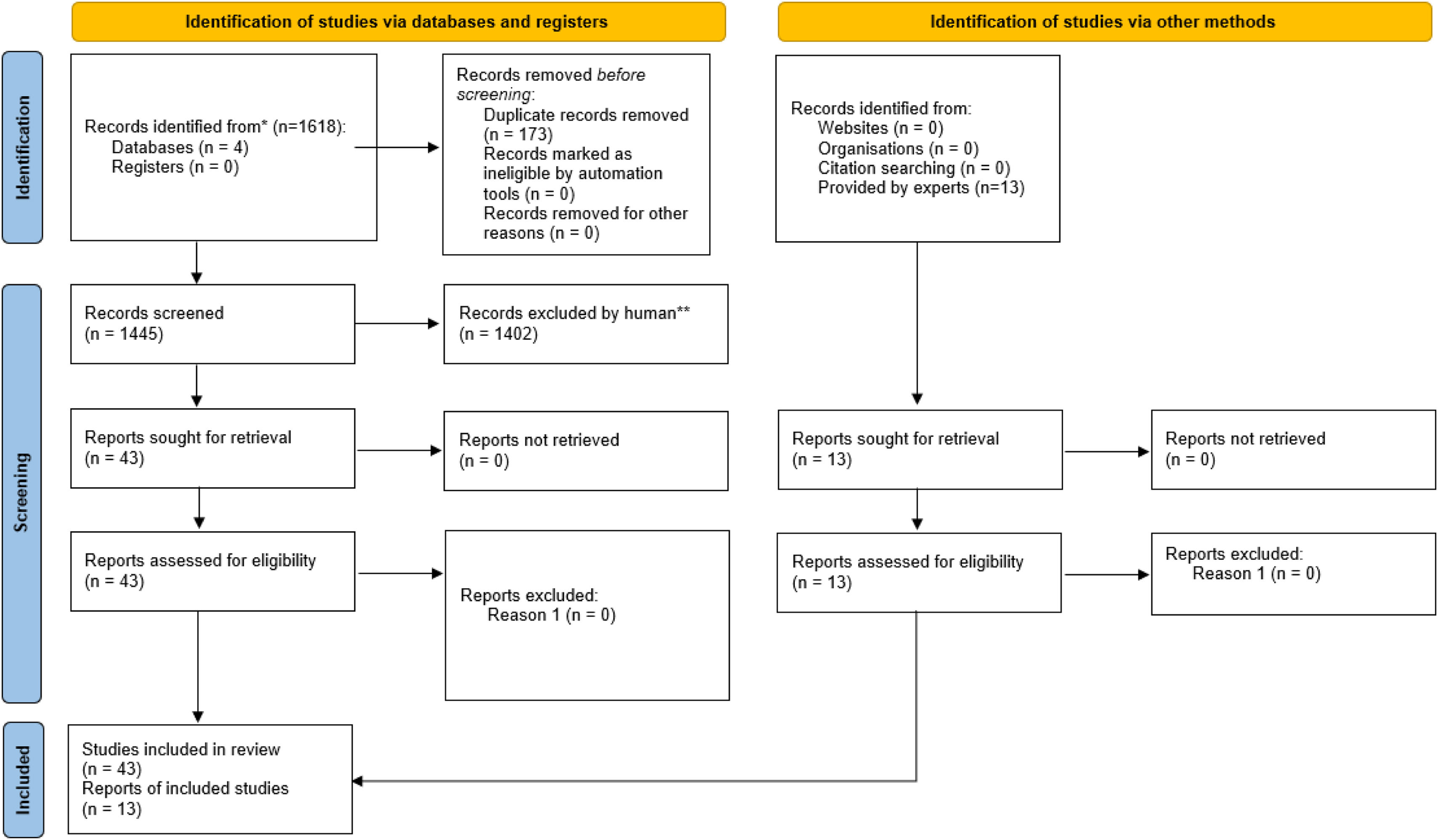
ResultsLiterature searchWe included a total of 56 publications, including 11 clinical practice guidelines, 17 systematic reviews, 15 other studies, and 13 documents provided by experts. Initially, 1445 studies that could possibly be included were identified, after duplicates were removed. Of these, 1402 were discarded based on screening criteria. This process is summarised in the PRISMA flowchart (Fig. 1).
Qualitative investigationFocus group results show that during the aHUS transition process, healthcare professionals are challenged by the lack of a structured protocol and limited coordination among teams. Psychosocial, socioeconomic and cultural barriers, together with patients’ fear of losing trusted paediatric providers, further complicate adaptation to adult care. Difficulties contacting the new department and navigating unfamiliar administrative circuits add to patient insecurity. Experts highlighted the need for clearer communication pathways, joint paediatric–adult visits, structured transition reports, and validated readiness tools. Case-management roles, particularly advanced practice nursing, along with family involvement and multidisciplinary support were considered essential to strengthen autonomy and ensure continuity of care.
For their part, four patients with aHUS (one adolescent nearing completion of the transition process and three adults) and one family member (the mother of a patient who had undergone transition) reported multiple barriers impacting autonomy, emotional well-being, and continuity of care during the transition to adult services. Limited information about aHUS, available resources, and social or economic support increased uncertainty and vulnerability. Patients also described emotional challenges, reduced visibility of the condition, and a perceived shift towards a more technical and less familiar adult care environment. These factors contributed to insecurity, lower treatment adherence, and difficulties navigating administrative processes. Supportive elements such as clear information, coordinated care, psychological support, and access to social resources were identified as essential. Patient organisations played a key role in providing community, visibility, and peer support.
RecommendationsThe transition from paediatric to adult care in aHUS patients poses challenges for patients, families, and healthcare teams. Forty one recommendations were developed from the literature review and expert consensus, organised by timing (before, during, after transition) and implementation level: “basic” for all centres and “advanced” for resource-equipped institutions.
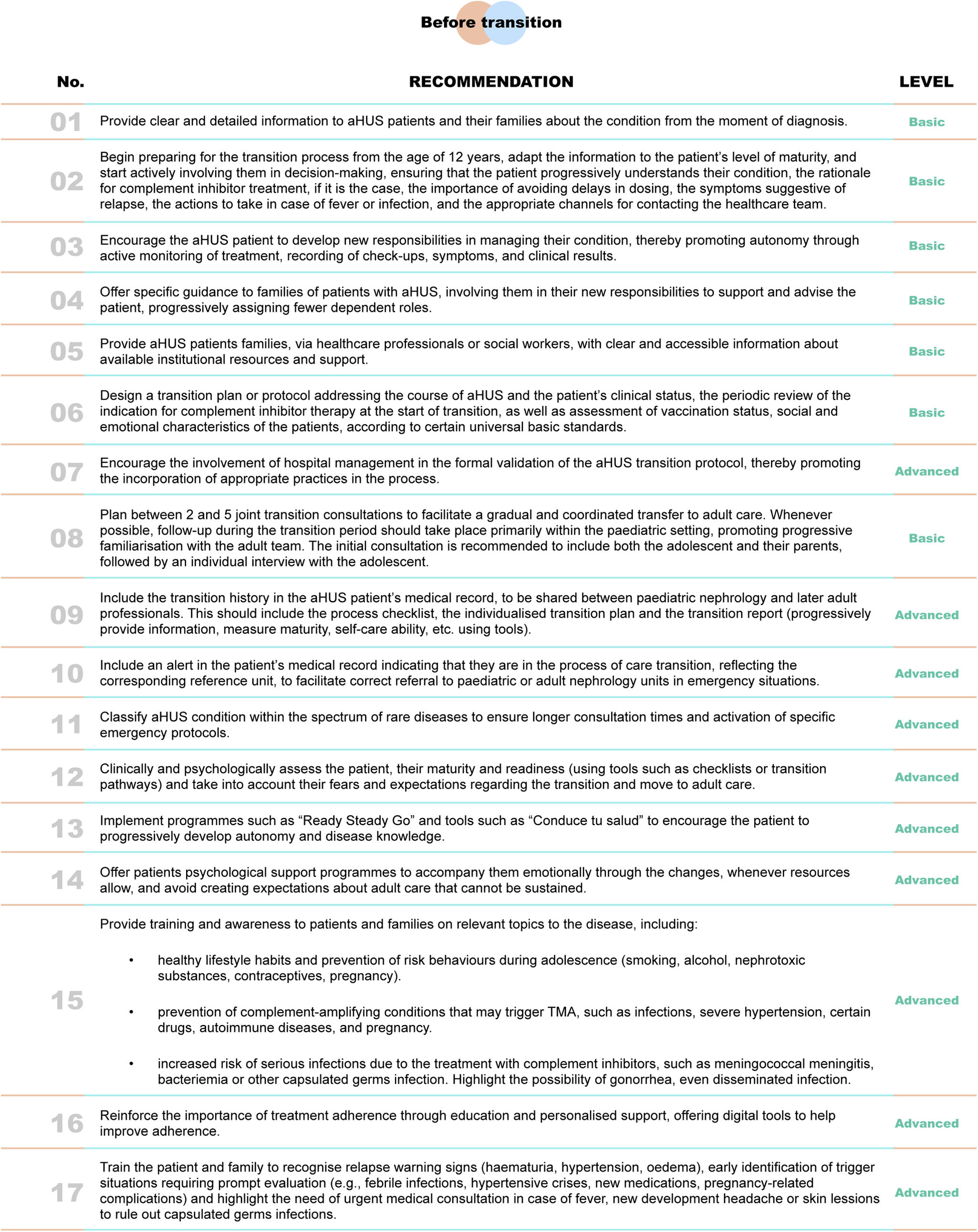
Before transitionSeventeen recommendations (Fig. 2) stress providing information about the transition process, the complement inhibitor treatment when needed, the relapse warning signs and actions needed, and relevant aspects of aHUS such as healthy lifestyle habits, prevention of complement-amplifying conditions that may trigger TMA and the increased risk of infections related to the treatment., etc. The information should be adapted to patient maturity, involving families in a supportive role, and fostering autonomy. A structured, individualised transition plan, including the periodic review of the indication for complement inhibitor therapy and the vaccination status, aligned with aHUS progression and endorsed by hospital leadership is essential. Continuity of care should be supported by a transfer folder containing a medical summary, transition history, formal report, and medical record alerts. Psychological support and structured programmes help prepare aHUS patients clinically, emotionally, and socially.
Recommendations for the period before aHUS transition from paediatrics to adult care. Overview of key clinical and organisational recommendations to prepare patients with aHUS for the transition from paediatric to adult healthcare services. This stage emphasizes early planning, assessment of patient readiness, patient and caregiver education, and coordination between paediatric and adult teams to ensure a smooth transition process.
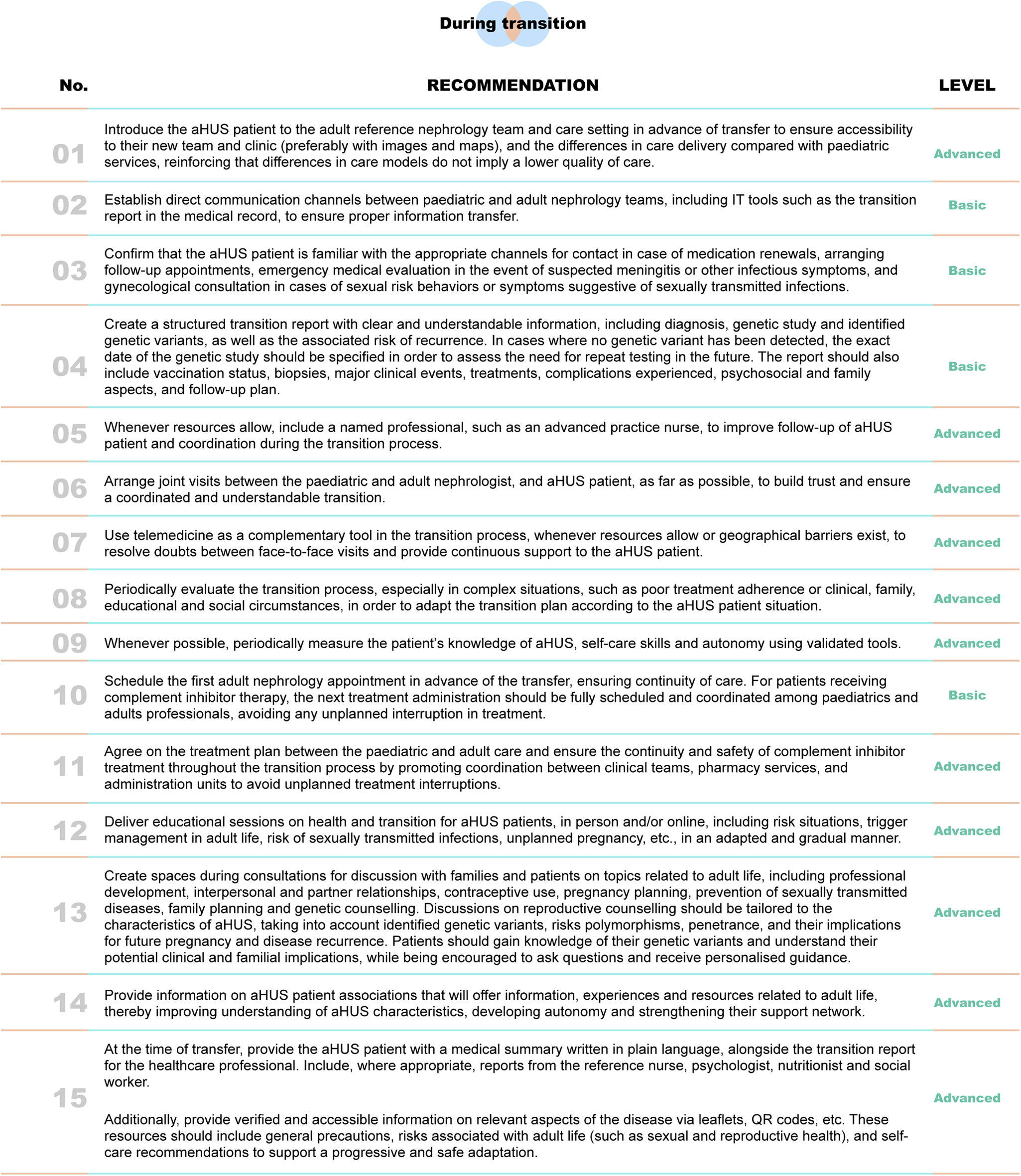
Fifteen recommendations (Fig. 3) aim to ensure smooth integration into adult care. Joint visits with paediatric and adult nephrologists, early exposure to adult facilities, knowledge of the appropriate channels for medication renewals or emergency medical evaluation and coordination between healthcare teams to ensure the continuity and safety of complement inhibitor treatment, scheduling the next treatment administration, reduce uncertainty and ensure proper treatment continuity. Safe spaces for discussing sexual health and adult life issues, risk situations, trigger management in adult life, as well as information about their genetic variants and clinical and familiar implications, together with collaboration with patient organisations contribute to strengthening autonomy and community support.
Recommendations for the period during aHUS transition from paediatrics to adult care. Overview of key clinical and organisational recommendations to guide patients with aHUS during the transition from paediatric to adult healthcare services. This stage highlights structured handover, multidisciplinary coordination and support for patient autonomy to facilitate successful adaptation to adult care.
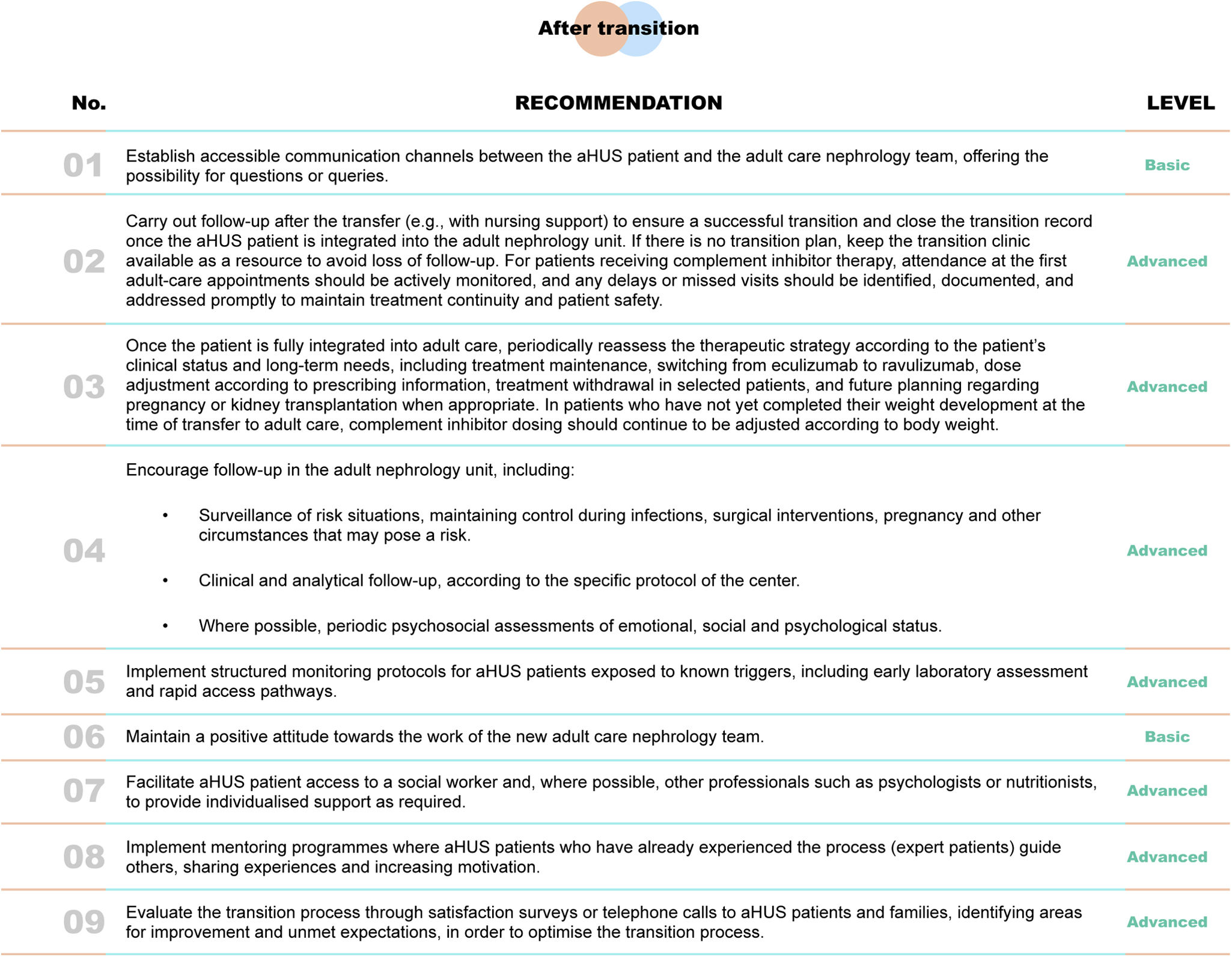
Nine recommendations (Fig. 4) focus on successful adaptation through ongoing communication, treatment monitoring and therapeutic strategy reassessment, psychosocial support, and multidisciplinary clinical and analytical follow-up, as well as structured monitoring protocols for aHUS patients exposed to known triggers. Additionally, evaluating patient satisfaction helps refine processes. Transition is dynamic, requiring flexibility with regard to patient needs, institutional resources, and evolving clinical practice.
Recommendations for the period after aHUS transition from paediatrics to adult care. Overview of key clinical and organisational recommendations for the management of patients with atypical haemolytic uraemic syndrome (aHUS) after transition to adult healthcare services. This stage focuses on ongoing monitoring, reinforcement of self-management skills, adherence to treatment, and integration into adult care pathways to ensure stable disease control and long-term patient independence.
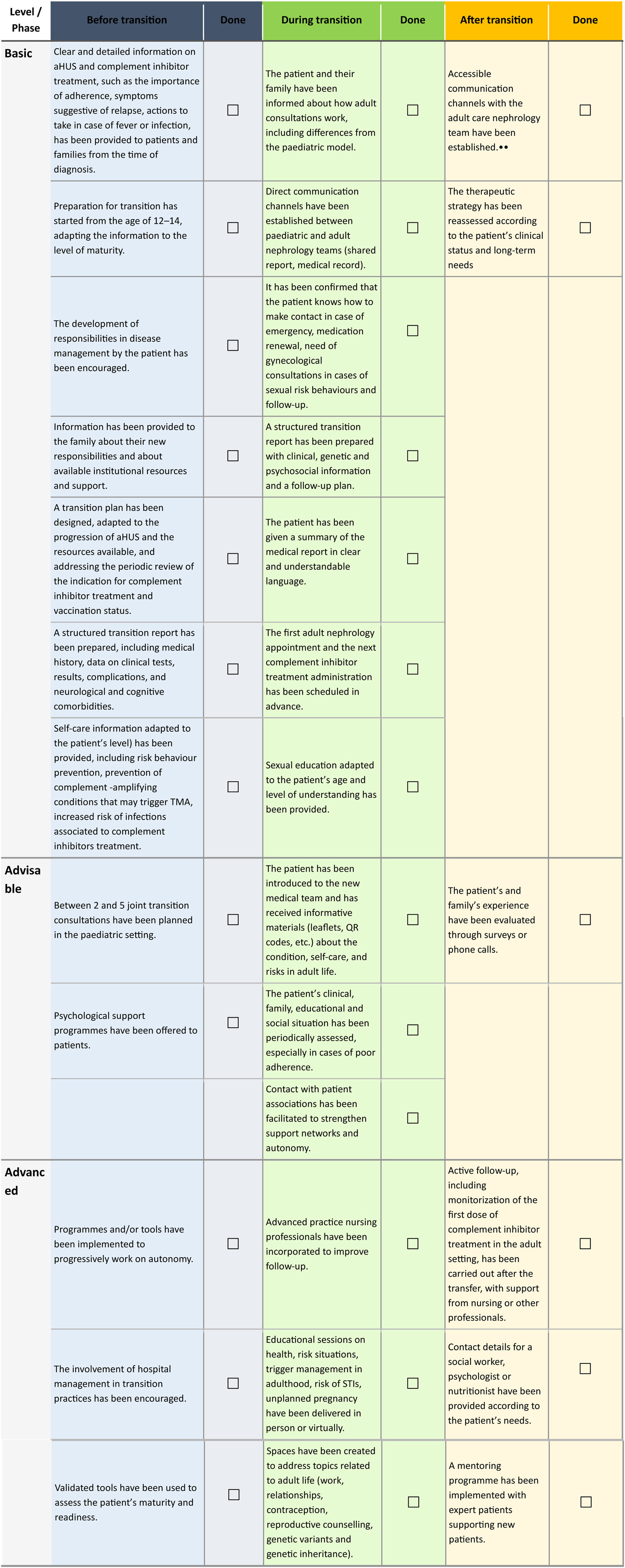
In addition to the recommendations, a practical checklist was developed to facilitate structured follow-up during the transition of aHUS patients from paediatric to adult care, which is presented as a matrix. This tool encompasses key domains, such as essential clinical monitoring, patient self-management skills, inter-team coordination, emotional readiness, psychosocial considerations, and the gradual reinforcement of patient autonomy. It clarifies the timing of each action, the responsible healthcare professional and its level of priority or importance (basic, advisable, or advanced). Its purpose is to provide healthcare professionals with a usable and applicable tool in real-world clinical practice to facilitate a comprehensive and structured transition process. Full details are provided in Table 2.
aHUS transition matrix defining key requirements before, during, and after transition.
Colour coding indicates responsibility for implementation: paediatric team (blue), shared paediatric-adult responsibility (green), and adult care team (yellow). Rows represent the level of implementation (basic, advisable, advanced), and columns represent the temporal phase of transition.
The transition from paediatric to adult healthcare represents a critical phase in the continuum of care for individuals with aHUS.12 This document lists a series of recommendations developed by a multidisciplinary panel of aHUS experts to address the main challenges faced by clinicians, patients and families throughout the transition process (before, during and after transition) and proposes key strategies to support coordinated, patient-centred, effective transition practices.13
Before transitionThe preparatory transition phase is a critical step in the success of the overall process, as it focuses on progressively strengthening patient autonomy and self-management. This phase can begin when the patient reaches approximately 12–14 years of age, provided that their clinical condition remains stable,14 and should initially take place within the paediatric setting, which offers a familiar and supportive environment where adolescents can gradually learn about their condition, treatment, and self-care responsibilities. As part of this process, paediatric aHUS healthcare professionals should progressively encourage independent participation during consultations, beginning with visits involving both the adolescent and their parents and evolving towards dedicated time alone with the adolescent. Clear, comprehensive, age-tailored information must be provided about aHUS, the complications, the rational for complement inhibition therapy, if it is the case, the risks associated with low adherence to treatment, the symptoms that suggest a relapse, starting at the time of diagnosis.14 Specific information about the transition process and available institutional resources are also key.15 Families need guidance to redefine their role, which requires supporting the patient while allowing them to become autonomous and playing an active role in their own clinical care.16 These recommendations align with the literature, which identifies insufficient knowledge of aHUS, the referral pathways and the differences in adult care as critical challenges during the transition process.17 Addressing these issues through structured guidance should help improve aHUS patient readiness and optimise outcomes during the transition to adult care.
In line with current literature that underscores the importance of a well-defined transition plan as a critical framework for facilitating the successful transfer of patients between healthcare institutions,8,18 experts emphasised the need for a structured transition plan, specifically adapted to the clinical progression of aHUS and the individual condition of the patient. This plan should be developed according to the resources available in the centre19 and should be developmentally appropriate, taking into account each young person's capabilities, needs and hopes.20 The plan should also review and document the indication of the complement inhibitor, specifying whether treatment is intended as long-term maintenance, preventive therapy, or remains subject to future reassessment. Relapse risk should also be stratified according to genetic findings, renal function, and clinical course.21 Unnecessary simultaneous changes, such as treatment discontinuation or switching therapies at the time of transfer, must be avoided whenever possible, and having into account that its discontinuation can lead potentially to TMA recurrence and renal failure.22 Vaccination status and prophylactic measures should be updated, with particular attention to meningococcal ACWY and B vaccination. A comprehensive treatment summary should be included in the transition plan, including current dosing regimen, treatment response, adverse events, infection history, vaccination status, and an emergency management plan.
Furthermore, tools that facilitate coordination between paediatric and adult teams are essential to maintain continuity and ensure safety.23 In this regard, a transfer folder that contains a comprehensive summary of the patient's medical information (including vaccination status, treatment, history of infections, potential specific risks and triggers, etc.) and shares the transition history between paediatric and adult care teams can further enhance continuity of care.8 The medical record should include a detailed checklist of the transition process and a formal transition report. An alert system indicating that the patient is undergoing a transition process also facilitates effective coordination in emergency situations.
Promoting autonomy requires the systematic assessment of readiness for transition, including the regular use of objective tools to assess the patient's preparedness and guide individualised support.12 International guidelines recommend that healthcare professionals periodically assess transition readiness in chronic diseases using objective, standardised measurements.24 Although no specific instruments for aHUS have been developed, tools such as The Boston Children Hospital Transition Toolkit, “Ready Steady Go”, or “Conduce tuSalud”, used in the transition of chronic kidney disease have been implemented to assess the patients’ needs and plan specific needs of adolescents and their families.25 As well, validated instruments, including the well-known transition readiness assessment questionnaire (TRAQ),12 Good2Go,26 GOT Transition,27 or STARx28 questionnaires, help measure self-management skills and progressively promote patient autonomy and improve understanding of their condition. At the same time, psychological support programmes, education and awareness on healthy lifestyle habits, prevention of risk behaviour and complement-amplifying conditions that may trigger TMA, awareness on the increased risk of infections associated to the treatment with complement inhibitors, and recognition of relapse warning signs and early identification of trigger situations requiring prompt evaluation, are key elements in fostering patient autonomy. General habits needed for autonomy are reflected in programmes such as “Hello to adult services”.29 These initiatives, together with adherence support tools, such as reminder systems, and medication alarms can strengthen patient engagement, boost treatment adherence30,31 and significantly improve long-term health outcomes.32 In addition, the use of in-clinic screening tools may be considered as a complementary strategy to these technological resources for the early detection of poor adherence. In this context, brief questionnaires or screening tests can be incorporated into routine clinical practice to assess adherence to concomitant medications.
During transitionThe transition from paediatric to adult care is a crucial process characterised by the gradual transfer of clinical responsibility and the introduction of a new medical team.33 Ensuring continuity of care, emotional support, treatment continuity and effective communication between healthcare teams is essential to promote autonomy, minimise uncertainties and preserve adherence and clinical outcomes, as it facilitates a successful integration into adult healthcare services.18,34
In order to ensure treatment continuity in patients treated with complement inhibitor therapy, agreement must be reached between the paediatric and adult care, unplanned dosing delays must be avoided, and the availability of the medication must be confirmed in advance, as well as the pharmacy pathway, the day-hospital or administration centre, and the responsibilities for prescribing and pharmaceutical validation. The next treatment administration should be fully scheduled and coordinated among paediatrics and adult nephrologists. Adherence should be actively assessed, identifying potential delays, missed doses, logistical barriers, concerns about adverse effects, or treatment refusal.
To address these needs, a structured, multidisciplinary approach, including the participation of a reference specialist, and when possible, a case manager (ideally a nurse), facilitates coordination and strengthens patient engagement,14,31,35 which has been highlighted in other guidelines20 and improves patients’ perceptions of care in chronic illnesses.36 Moreover, joint visits with both aHUS paediatrician and nephrology adult teams support gradual familiarisation, help to reduce uncertainty, and foster confidence in the adult care team, as proven in other chronic illnesses.13,15,16,31,37 These visits should be carefully planned in advance and may also include a guided introduction to the new hospital environment.
At this stage of the process, experts highlight the need to explain how adult care differs from paediatric care, particularly regarding accessibility, workflow, the care model, communication channels for medication renewals, follow-up appointments, emergency medical evaluation in case of infectious symptoms, and gynaecological consultations in case of sexual risk behaviours or potential sexually transmitted infections (STIs). This will help the patients become familiar and adapt confidently to the new model.38 Aligned with the NICE guidelines, which recommend to give information about what to expect from adult service and what support is available to them.20 Lack of communication and standardised transition protocols remain the main barriers identified in the literature.39,40 Therefore, experts strongly recommend establishing direct communication channels between both teams to ensure an efficient exchange of patient data,41 a recommendation that has also been emphasised in other transition processes, such as those described for lysosomal acid lipase deficiency.42 To facilitate this, they recommend the creation of a comprehensive transition report that includes diagnostic details, genetic studies with a specific report or the genetic variants including risk of evolution of chronic renal failure or recurrence, treatment and vaccination history, complications and psychosocial information. The report will also include the exact date of the genetic study, in order to assess if it should be repeated in the future. This report helps the adult team better understand the patient's background and tailor the transition process to their individual needs. Telemedicine can also serve as a complementary tool to support communication and clarify doubts between in-person consultations.32 The use of verification tools such as checklists in the different phases of the transition process is also recommended.
Experts agree on the importance of regularly evaluating the patient's clinical, family, educational and social situation, which allows healthcare teams to adapt the transition plan to patient needs. Besides this, programmes such as “Conduce tusalud”25 aid in assessing autonomy, encouraging informed decision-making and tailoring the transition pathway accordingly. In parallel, reinforcement of health education, including risk situations, trigger management in adult life, risk of STIs or family planning is crucial to promote responsible behaviours and patient empowerment in disease management, factors that are determinant in improving adherence and long-term outcomes.43
Experts also emphasise the need to create safe and supportive spaces for open dialogue with the patients and families about aspects related to adulthood, such as professional aspirations, interpersonal relationships, sexuality and the possibility of parenthood. In this context, discussions on reproductive counselling should be tailored to the specific characteristics of aHUS, taking into account the identified genetic variants, risk polymorphisms, penetrance, and their implications for future pregnancy and disease recurrence. Patients should be supported in gaining knowledge of their genetic variants and understanding their potential clinical and familial implications, while being encouraged to ask questions and receive personalised guidance. Issues associated with low adherence, high-risk behaviours, especially alcohol abuse and other substances, sexual health, and sexually transmitted diseases should be also considered. Addressing these issues naturally and respectfully contributes to emotional security and a healthier adjustment to adult life.8,30,44 Patient organisations play an important role during this period, offering peer support, fostering autonomy and empowering patients to take an active role in managing their health.8 Aligned with the NICE guidelines, the peer support groups may be provided by voluntary sector organisations, in a way that ensures the safety and wellbeing of the young people involved.20 Fostering collaboration between transition care teams and these organisations enhances the support network and strengthens the overall transition process.35
Finally, patients should be provided a clear summary of their medical records with a written action plan for suspected relapses, including warning signs, recommended urgent laboratory assessments, and clear instructions on where to seek medical attention. Accessible user-friendly educational materials with this information and self-care recommendations at the moment of transfer ensures a safer and more confident integration into the adult healthcare system.35
After transitionSuccessful integration into adult care requires continuous monitoring and tailored support to ensure that patients adapt effectively to the new healthcare setting. In particular, during the first year following transfer to the adult care team, attendance at scheduled consultations and the timely administration of complement inhibitor therapy should be actively monitored. Missed appointments, treatment delays, or interruptions should be documented, investigated, and addressed promptly to minimise the risks of loss to follow-up, reduced adherence, and disease relapse.
To support this process, open communication channels between the patient and the adult care team should be maintained, as well as continued follow-up, allowing for the transition process and report to be formally closed when appropriate.32 This follow-up should include monitoring of renal function, blood pressure control and evaluation of cardiovascular risk factors to safeguard long-term health outcomes.45 Once the patient has been fully integrated into adult care, the therapeutic strategy should be periodically reassessed according to clinical status and evolving long-term needs, including treatment continuation, potential switching from eculizumab to ravulizumab, dose adjustment, treatment withdrawal in selected patients, and future planning regarding pregnancy or kidney transplantation when appropriate.
Experts further emphasise the importance of fostering a positive attitude in patients towards their new medical team. The availability of multidisciplinary support, including social workers, psychologists and nutritionists, contributes to more comprehensive and individualised care.
Finally, evaluating transition effectiveness is key to improving future pathways. Patient satisfaction surveys, follow-up calls and structured feedback mechanisms help identify strengths and unmet needs, ensuring that transition protocols remain patient-centred and adaptable to individual circumstances.31,46
Role of Centres of Excellence and collaborative networks in aHUS transition careFinally, although no recommendations have been developed on this specific topic, the authors consider that the development of Centres of Excellence for transition care in aHUS may represent a valuable strategy to improve coordination and standardisation of care. In rare diseases, initiatives such as the European Reference Networks (ERNs) have demonstrated that pooling expertise and facilitating collaboration across centres improves clinical decision-making, access to specialised knowledge, and overall quality of care.47
While certification by organisations such as the Global aHUS Alliance could support the harmonisation of quality standards,48 a flexible network-based model adapted to different healthcare settings may be more feasible. Strengthening collaborative frameworks between centres of expertise appears essential to ensure equitable and high-quality transition care in aHUS.
Study strengths and limitationsA key strength of this work lies in its robust, multi-stakeholder methodology, which integrates insights from clinicians, patients, and caregivers, resulting in comprehensive and practice-oriented recommendations. Notably, no comparable transition-focused initiatives exist for aHUS to date, underscoring the unique contribution and pioneering nature of this consensus. Since the study was developed by a multidisciplinary scientific committee in Spain, its conclusions may not be directly generalisable to other healthcare systems or patients with other diseases. Furthermore, the applicability of the recommendations may vary depending on institutional resources, models of care and infrastructures involved in the management of aHUS, all of which differ among regions and countries.
In addition, although the literature review was conducted using a structured and systematic approach, it does not constitute a formal systematic review. The quality of evidence was not graded, and the recommendations were not assigned levels of strength, which may introduce a degree of expert-related bias.
Finally, given the rarity of aHUS, the qualitative component is based on a limited and reduced number of patients and caregivers, which may not fully reflect the diversity of experiences, healthcare needs, clinical trajectories, psychosocial contexts and healthcare needs across the broader aHUS population. This limitation is inherent to research in rare diseases, where patient recruitment is often challenging due to the low prevalence of the condition. Nevertheless, the inclusion of participants with different transition experiences, together with the triangulation of findings from patients, caregivers, healthcare professionals, and the literature review, allowed the identification of key aspects that are likely to be relevant to many individuals undergoing transition.
ConclusionsTransitioning patients with aHUS from paediatric to adult care remains a vulnerable, multidimensional process affected by clinical, emotional, social, and organisational factors. This consensus provides the first comprehensive, aHUS-specific guidance document for a successful transfer. The 41 recommendations developed by the expert committee offer a structured, adaptable framework that emphasises early preparation, education of patients on aHUS pathophysiology, relapse triggers, and early warning signs of TMA; reinforcement of infection risk awareness in the context of complement inhibition and ensuring uninterrupted access and adherence to complement inhibitor therapy across care settings, with a sustained support after integration into adult care. Core elements include patient education, multidisciplinary collaboration, readiness assessments, joint visits, psychological and social support, and strong communication and coordination between paediatric and adult nephrology healthcare teams. Implementing these recommendations could minimise care and treatment discontinuity, improve autonomy and adherence, and ultimately protect long-term renal and systemic outcomes throughout adulthood.
- •
What was known: knowledge of aHUS is advancing but no guidelines are available on the transition process from paediatric to adult care.
- •
This study provides practical recommendations to design a structured, adaptable framework that emphasises early preparation of aHUS patient, coordinated transfer, uninterrupted complementor inhibitors and sustained support after integration into adult care.
- •
Potential impact: implementing these recommendations will potentially minimise care and treatment discontinuity, improve autonomy and adherence, and ultimately protect long-term health outcomes of aHUS patients.
Conceptualization; A.M., M.C.; Methodology: A.M., M.C.; Investigation: A.M., M.A., A.A., M.B., M.E., M.C.; Validation: A.M., M.A., A.A., M.B., M.E., O.A., F.F., A.M.R., S.S, S.Z., M.C.; Writing – Original Draft: A.M., M.A., A.A., M.B., M.E., M.C.; Writing – Review & Editing: A.M., M.A., A.A., M.B., M.E., O.A., F.F., A.M.R., S.S, S.Z., M.C.; Supervision: A.M., M.C.
FundingThis research was funded by Alexion Pharma.
Conflict of interestsAM received funding for the present manuscript and payment for lectures and presentations from ASTRA Zeneca-Alexion; support for attending conferences from ASTRA Zeneca-Alexion, Alynam, Laboratorios Farmacéuticos Rovi and Astellas.
MA received funding for the present manuscript, honorarium for participation on advisory board, payment for lectures and presentations and support for attending training activities and conferences from ASTRA Zeneca-Alexion and Kyowa Kirin.
AA received funding for the present manuscript from ASTRA Zeneca-Alexion; payment for lectures and presentations from AstraZeneca, CSL Vifor, Samsung, GSK and Novartis; support for attending meetings and/or travel from Samsung, CSL Vifor, ASTRA Zeneca-Alexion and GSK; honorarium for participation on advisory board from Novartis.
MB received honorarium for lectures and advisory boards from Alexion, AstraZeneca, Sobi, Novartis, Otsuka, Chiesi and Samsung Bioepics.
ME received funding for the present manuscript from ASTRA Zeneca-Alexion; consulting fees from Alynam Pharmaceuticals, Sobi, Chiesi and Kyowa Kirin; payment for lectures and presentations from ASTRA Zeneca-Alexion and Alynam Pharmaceuticals; support for attending meetings and/or travel from Chiesi, ASTRA Zeneca-Alexion and Kyowa Kirin; honorarium for participation on advisory board from ASTRA Zeneca-Alexion and Sobi.
MC received funding for the present manuscript from ASTRA Zeneca-Alexion; consulting fees, payment for lectures and presentations and support for attending meetings and/or travel from ASTRA Zeneca-Alexion, GSK, Sanofi, Samsung, CSL Vifor, Chiesi and Astellas; payment for expert testimony from ASTRA Zeneca-Alexion; honorarium for participation on advisory board from ASTRA Zeneca-Alexion, GSK, Sobi, Sanofi, Samsung and Chiesi.
OA received funding for the present manuscript and payment for expert testimony from ASTRA Zeneca-Alexion.
Fátima Fraga received funding for the present manuscript, payment for lectures and presentations, support for attending meetings and honorarium for participation on advisory board from ASTRA Zeneca-Alexion.
AMR has nothing to declare.
SS has nothing to declare.
SZ has nothing to declare.
Data availability statementThe data underlying this article are available in the article and in its online supplementary material. More intermediate data is available upon request.
The authors wish to thank the patients for their participation, Alexion Pharma for their support and funding of the project, and Crowe Accelera Management (previously GOC Health Consulting) for their methodological and medical writing support throughout the development of the project.
The followings are the supplementary data to this article: